
Recent trade decisions are the next test for saiga antelope
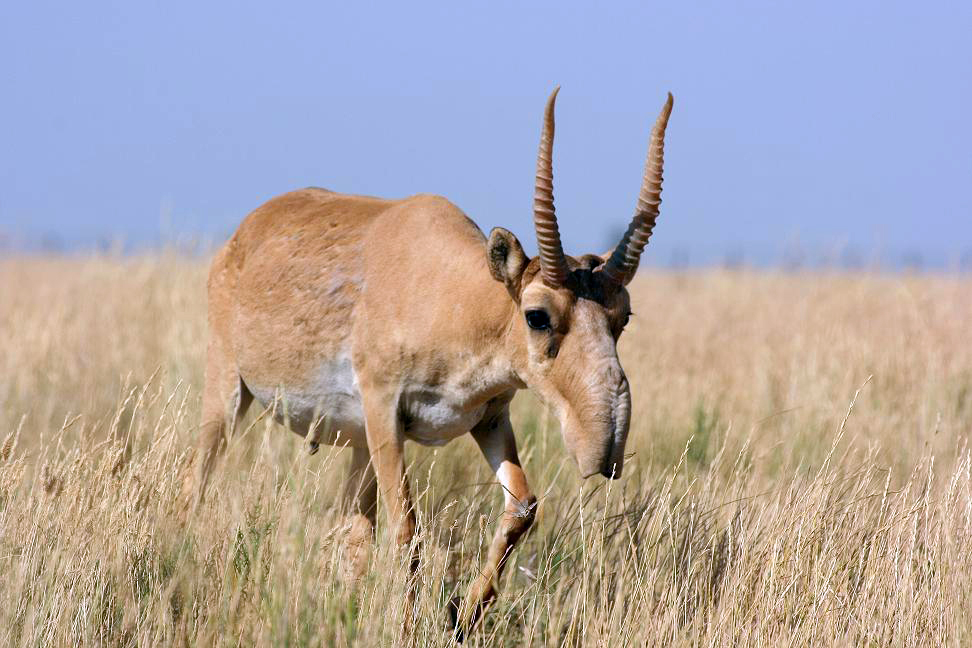
Oh, the remarkable resilience of the saiga antelope (Saiga tatarica)! Over recent decades, this flagship species of the Eurasian steppe endured precipitous declines in populations driven by mass mortality events and human-induced pressures, bringing it to the brink of extinction in Kazakhstan. Yet, through the sustained efforts of governments, scientists, local communities, and international conservation organizations, the saiga has staged an extraordinary comeback. In recognition of this remarkable rebound, the IUCN Red List reclassified the species in late 2023 from Critically Endangered to Near Threatened, marking one of the most significant wildlife recoveries of the century.
Today, Kazakhstan’s saiga population exceeds four million individuals and is projected to approach five million after the 2026 calving season. But just as the species’ future seemed secure, new challenges have emerged. A recent international decision allowing commercial export of saiga horns from Kazakhstan, combined with a large-scale national cull of the antelopes earlier this year, threatens to jeopardize these hard-won gains, raising concerns about what comes next for this fragile species.
CITES approves commercial saiga horn trade from Kazakhstan
At the 20th meeting of the Conference of the Parties (CoP20) to the Convention on International Trade in Endangered Species of Wild Fauna and Flora (CITES) in Samarkand, delegates voted to permit international commercial trade in saiga horn from Kazakhstan, overturning the long-standing zero-export quota for the species. The amendment allows Kazakhstan to export up to 10,000 kilograms (≈22,000 pounds) of saiga horn per year for three years, after which the quota will revert to zero and be reconsidered at the next CITES meeting.
Although Kazakhstan emphasized its regulatory systems and processes for tracking, labeling, and securing horn stockpiles, reopening trade introduces significant risks, especially for smaller, vulnerable saiga populations in other range states. In Mongolia, for example, the distinct species Saiga borealis has grown to around 25,000 individuals. Despite this growth, the population remains highly susceptible to threats such as harsh winters, disease outbreaks, habitat fragmentation, and poaching driven by Asian demand for the antelope’s horns.
These vulnerabilities are further compounded by renewed commercial interest in saiga horn, which has long been prized in traditional medicine markets. Reopening trade could further stimulate consumer demand. The CITES approval also places additional pressure on enforcement systems, given that data on saiga horn stockpiles in consumer nations is incomplete or unavailable and mechanisms to prevent laundering and illegal trade are not in place.
Kazakhstan’s 2025 saiga population cull
In the months leading up to the CITES decision, between July 1 and November 30, 2025, Kazakhstan carried out a large-scale reduction of its saiga antelope population, culling approximately 196,000 individuals. At a meeting in early December on sustainable management of the population, the Ministry of Ecology and Natural Resources explained that this measure was taken in response to rapid population growth, aiming to prevent agricultural damage and maintain ecosystem balance. All saiga carcasses were transferred to domestic meat-processing facilities, with officials confirming that the horns from these animals were fully recorded, labeled, and stored under enhanced security and specialized infrastructure. Additionally, the Ministry announced a collaborative project with KazakhTelecom to implement digital labeling of saiga horns, further strengthening traceability and oversight. The proposed system received support at the CITES meeting and is being considered as the basis for the gradual lifting of restrictions on the export of derivatives of Kazakh origin.
What’s next
How this scenario unfolds over the next three years—and the impact it will have on Kazakhstan’s saiga population and those in other range states—remains uncertain. For Kazakhstan’s herds to remain strong, coordinated action will be essential from both the government and importing countries. Rigorous oversight is needed to ensure that new monitoring and labeling systems operate as intended, preventing the laundering of illegal horns and other activities that could threaten the species long-term survival. Importing countries must also disclose and document their existing horn stockpiles with full transparency, a critical step in closing loopholes that traffickers might exploit.
The saiga’s remarkable recovery stands as a testament to successful conservation efforts—a legacy that must not be put at renewed risk. Actions conducted in the coming years will determine whether its story remains one of resilience and recovery rather than relapse.