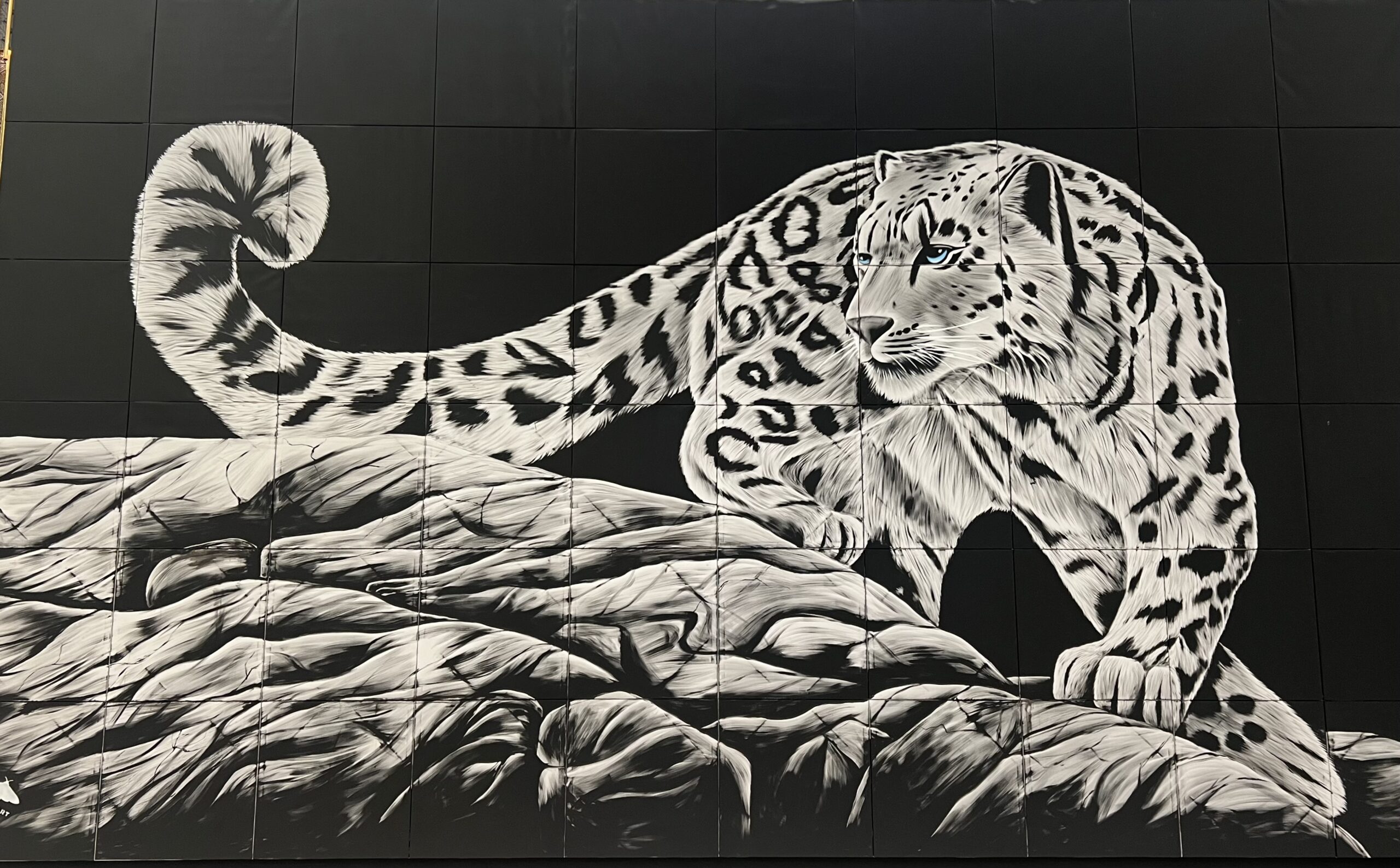
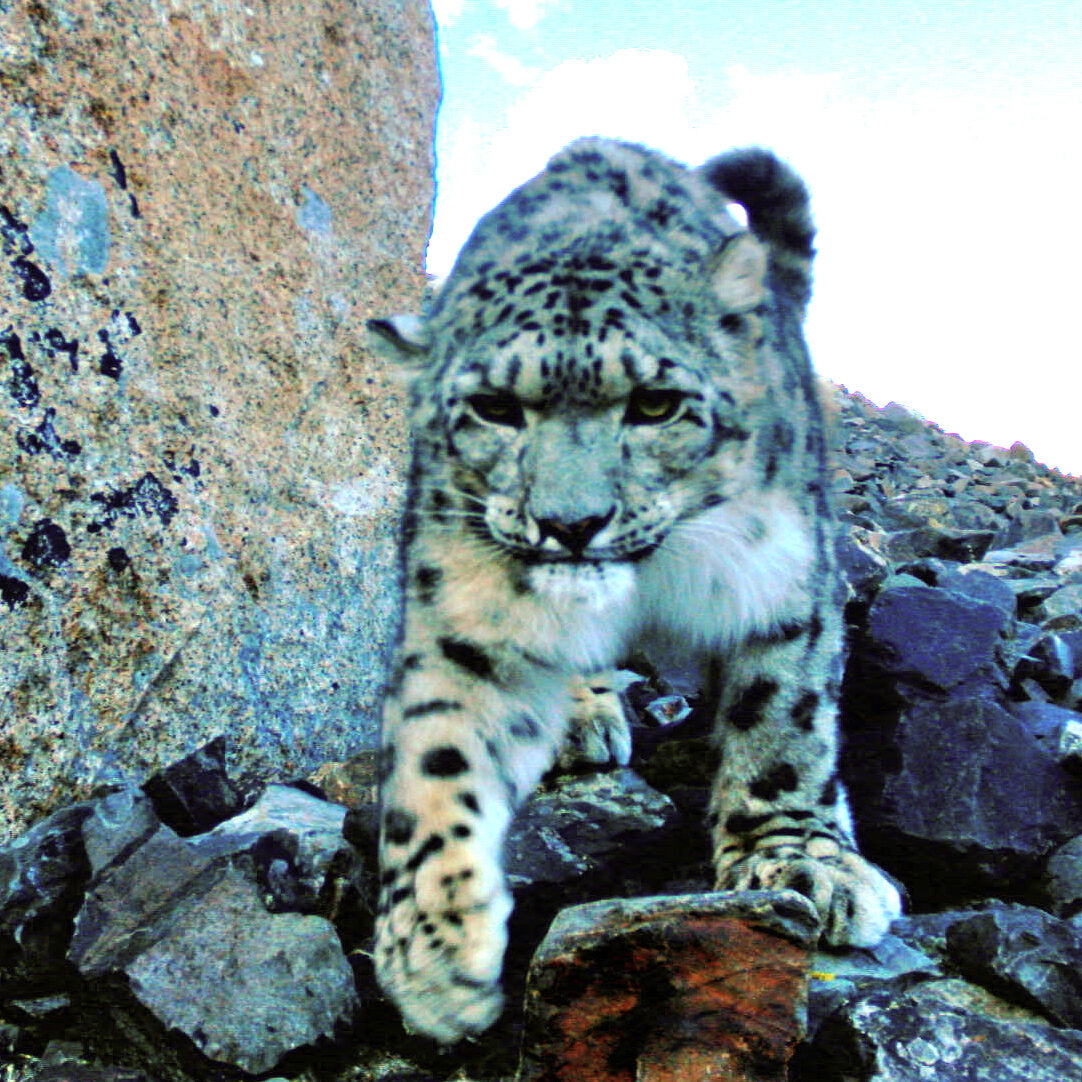
The snow leopard is one of Kazakhstan’s rarest animals and an enduring national symbol. Its populations are scattered across the country’s high mountain ranges, from the Altai and Tarbagatai in the east to the Tien Shan, Saur, and Dzungarian Alatau in the south and southeast. Key protected zones and national parks protect some of these habitats, while connective corridors and other areas are unprotected.
Throughout much of the 20th century, snow leopard numbers declined sharply due to habitat fragmentation, poaching, and the loss of prey species such as the Siberian ibex. By 1995, only 80–100 individuals remained in Kazakhstan. In response, the government adopted the National Action Plan (2015–2024) and the Strategy for the Conservation of the Snow Leopard (2011), aimed at restoring and protecting the population.
Thanks to these and other efforts, the species is showing signs of recovery. As of September 2025, data from the Ministry of Ecology and Natural Resources estimates approximately 189 snow leopards in Kazakhstan—roughly double the population recorded 30 years ago. The species has been listed in the Republic of Kazakhstan’s Red Book since its first edition, published in 1978.
A critical component of the recovery effort has been the creation of specially protected natural areas (SPNAs), which cover 3.6 million hectares of key snow leopard habitat. Nearly 70 percent of snow leopard range is now under formal protection, spanning reserves such as Ile-Alatau, Kolsai Lakes, Altyn-Emel, Sairam-Ugam, Zhongar Alatau, Charyn, Tarbagatai, Katon-Karagai, Karatau, and Western Altai. Altyn Emel National Park, with its abundant prey, strong protection, and minimal human interference, supports a thriving population of snow leopards. Other important refuges include Ile-Alatau National Park and the Katon-Karagai Reserve, with new protected zones planned, including the proposed Merken Regional Park in Zhambyl Region.
As of October 2025 Kazakhstan’s snow leopard monitoring network included more than 290 camera traps and 28 thermal imagers installed across 14 protected areas, along with satellite collars placed on 11 animals to track movement and behavior. These tools provide real-time data for population assessment and habitat management.
Partnerships and International Support
Non-governmental organizations, scientific institutions, and government agencies share responsibilities for studying and protecting Kazakhstan’s snow leopard population. Specifically, these include the Association for the Conservation of Biodiversity of Kazakhstan (NGO) and divisions of the Ministry of Ecology and Natural Resources. Ongoing, coordinated work has achieved some success, notably in reducing poaching and illegal trade of snow leopards, which flourished in Kazakhstan in the 1900s and early 2000s.
The United Nations Development Programme (UNDP) has also supported Kazakhstan’s snow leopard conservation since 2018, supplying camera traps, drones, smartphones, and other equipment to improve data collection and monitor both the species and its prey base.

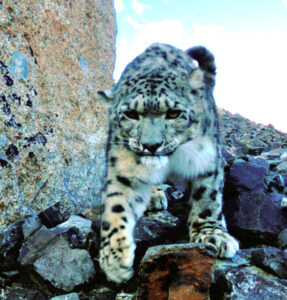 Shy and reclusive, the snow leopard (Panthera uncia) has evolved to live in some of the harshest conditions on Earth. Insulated with a thick fur that serves as a natural camouflage and equipped with wide feet that act as natural snowshoes, the big cats are perfectly suited to live in the steep and rugged landscapes of their high-altitude homes in mountains across a vast range of Asia. Tremendous jumpers, the snow leopard can leap as far as 50 feet.