Gray wolf

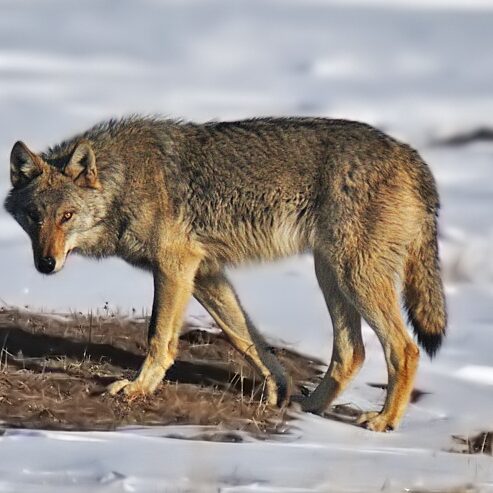
The gray wolf (Canis lupus), an apex predator and the largest member of the dog family (Canidae), is widely distributed across Kazakhstan. Wolves inhabit all of the country’s major ecosystems, ranging from open steppes and semi-deserts to northern forests and high mountain ranges. Although their overall range is extensive, wolf distribution is uneven and closely linked to the availability of prey and water sources. Current estimates place Kazakhstan’s wolf population at approximately 35,000–37,000 individuals.
Wolves in Kazakhstan exhibit notable regional variation in body size and coat, reflecting adaptation to different environments. Four subspecies are recognized in the country. Northern forest wolves tend to be the largest, while wolves inhabiting southern desert regions are generally smaller in stature. Coat characteristics also vary, from the thick, long gray fur typical of mountain and taiga wolves to the shorter, sparser, pale-gray coats of steppe and desert wolves.
In terms of behavior, wolves hunt both individually and in social groups, most commonly in packs of six to ten animals. They use a range of hunting strategies, including stalking, ambushing, long-distance pursuit, and coordinated group hunts that drive and isolate prey. Their diet is diverse and varies seasonally and regionally. Wolves primarily prey on wild and domestic hoofed animals, such as deer, wild ungulates, cattle, horses, sheep, and goats. They also consume wild boar and, to a lesser extent, mountain goats, marmots (particularly in summer), hares, badgers, small rodents, and birds.
Although the “big bad wolf” is often portrayed as a fearsome predator, wolves actually play a crucial and largely beneficial role in ecosystems. By regulating ungulate populations, they help maintain ecological balance and prevent overgrazing. The remains of their kills also provide food for a variety of scavenging animals and birds, including some rare or endangered species, that depend on this resource to survive.
Importantly, wolves help control jackal populations, protecting both wildlife and agricultural interests. Jackals are highly adaptable and opportunistic feeders, consuming a wide range of prey and agricultural crops. When jackal numbers are unchecked, they can cause significant ecological harm by preying on birds, young animals, and destroying crops such as watermelons and melons.
Because of their profound influence on ecosystem structure and function, ecologists refer to wolves as “ecosystem engineers”.