Ili saksaul jay
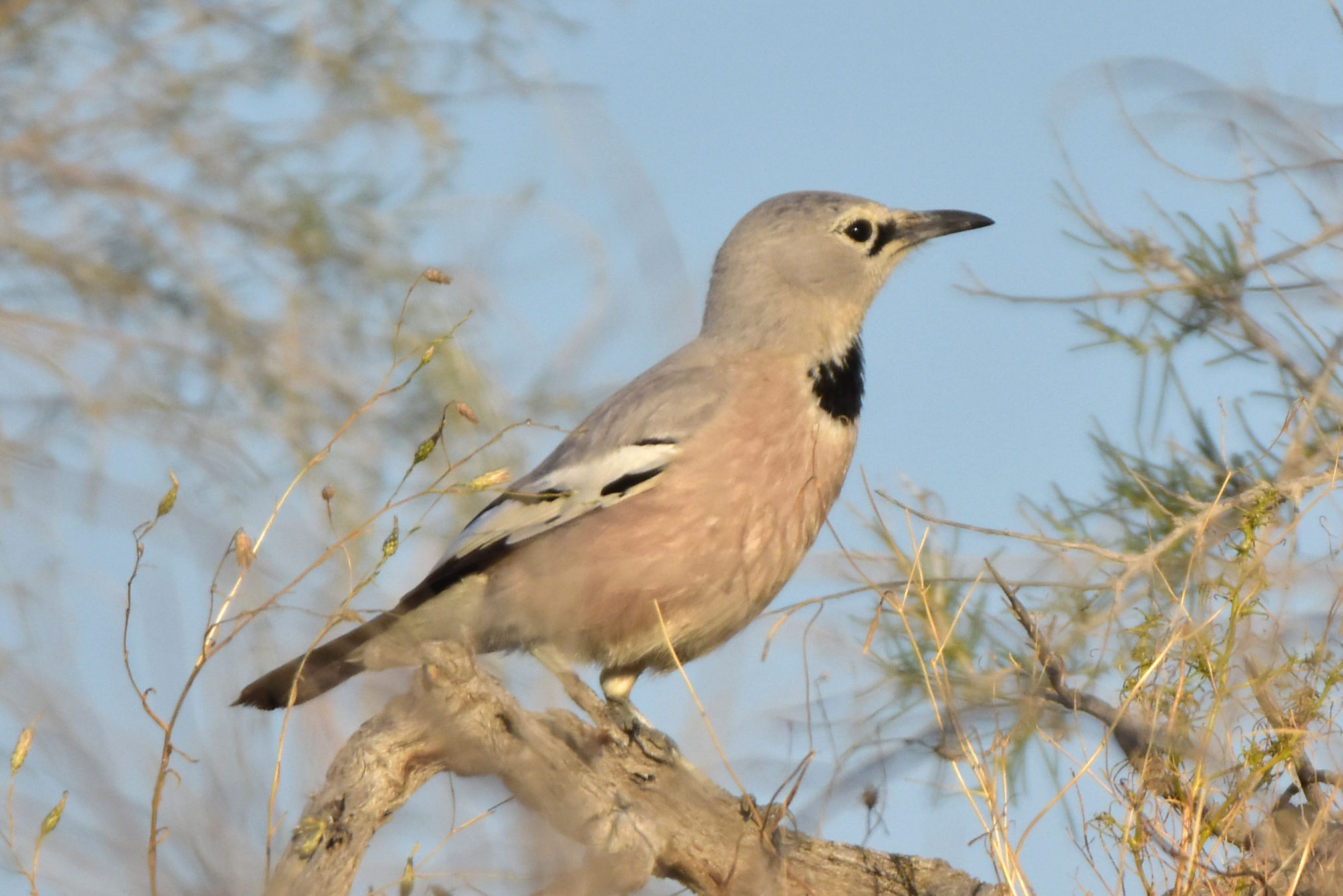
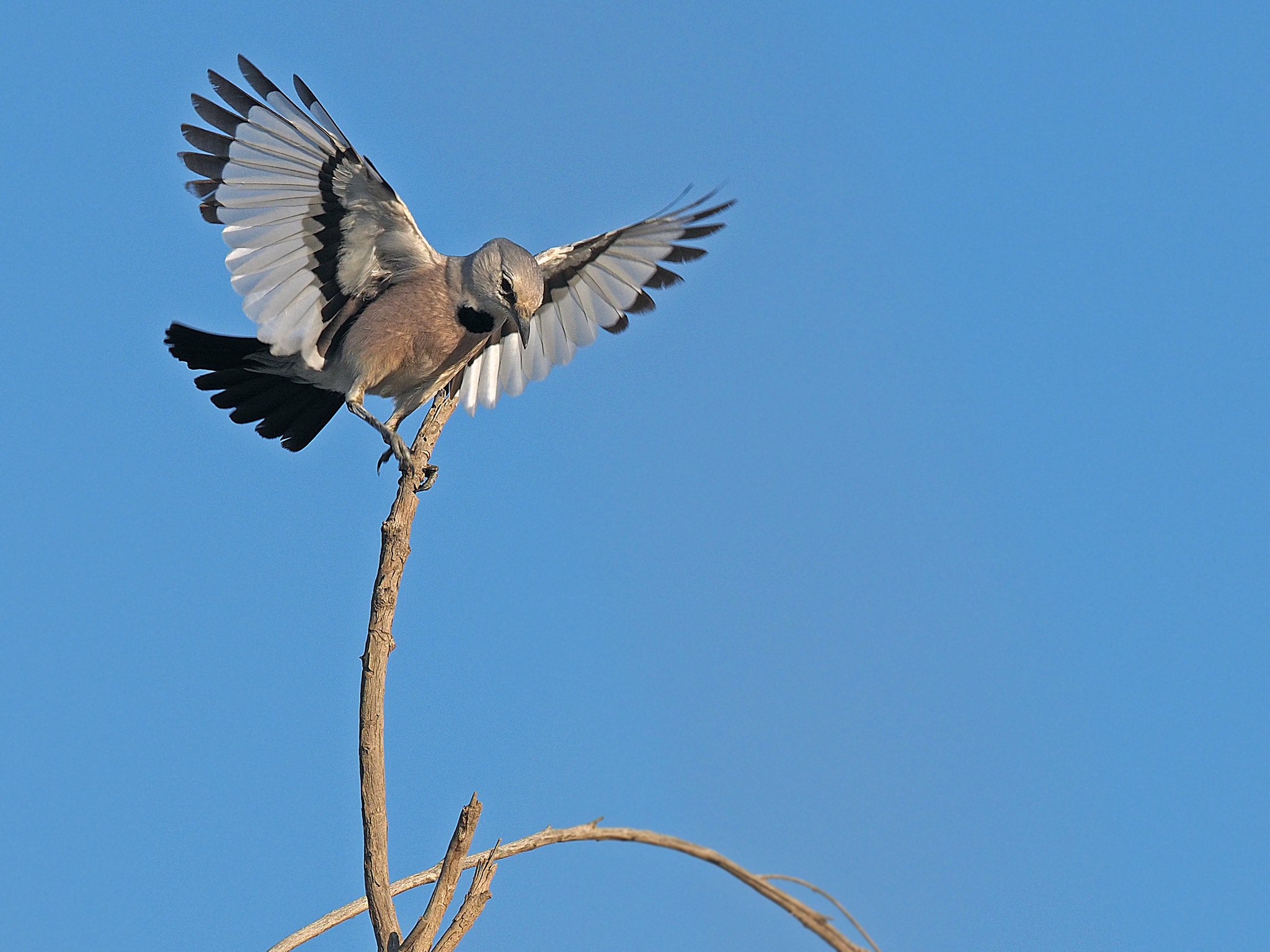
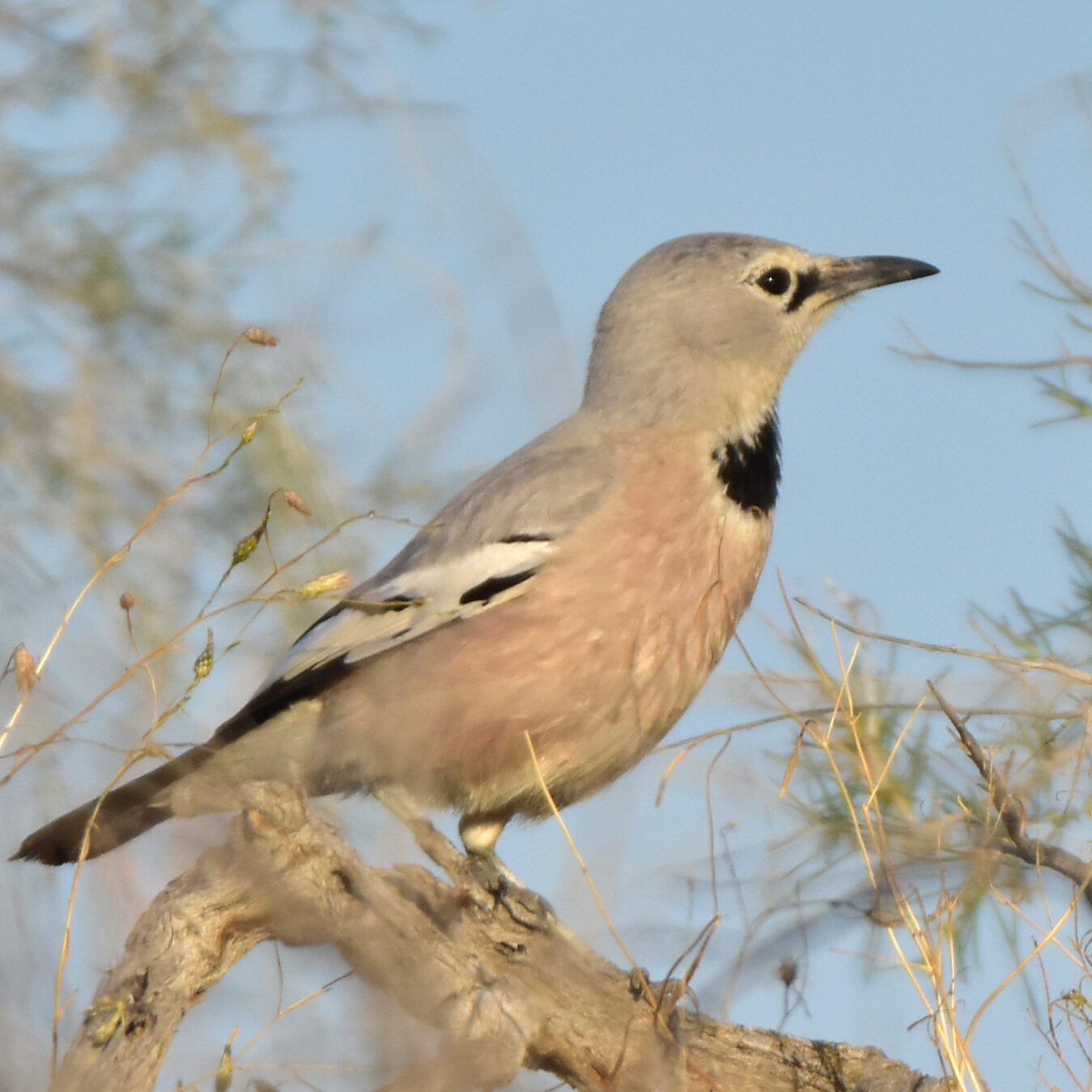
The Ili saxaul jay (Podoces panderi ilensis), one of three recognized subspecies of the Turkestan ground jay (Podoces panderi), stands out as the only avian subspecies endemic to Kazakhstan. For brevity, it is referred to here as the Ili jay.
Discovered in 1915 after years of dedicated fieldwork by zoologist Vladimir Nikolaevich Shnitnikov, this rare bird inhabits the sandy steppe between the Ili and Karatal rivers in the Southern Balkhash region. Unlike its relatives in the Kyzylkum Desert (Kazakhstan and Uzbekistan) and the Karakum Desert (Turkmenistan), the Ili jay occupies a much smaller, isolated range, making it a unique and important part of Kazakhstan’s natural heritage.
Measuring approximately 30 cm in length and weighing 80-150 grams, the Ili jay is easily identified by its ash-gray upperparts, pink-tinged belly, and black and white wings. A distinctive black spot on its chest further sets it apart from other birds in the region.
The Ili jay’s unusual gait is another defining feature. Like other ground jays, this subspecies has short, rounded wings for brief flights, while relying primarily on sprinting to cross the desert. Its motion, reminiscent of a horse's amble, is reflected in its Kazakh name, “zhorgatorgai,” which translates to “pacing sparrow.”
Solitary and highly territorial by nature, the Ili jay inhabits desert landscapes dominated by saxaul trees and associated shrubs.