Establishing "Important Plant Areas" to protect Kazakhstan's rare flora
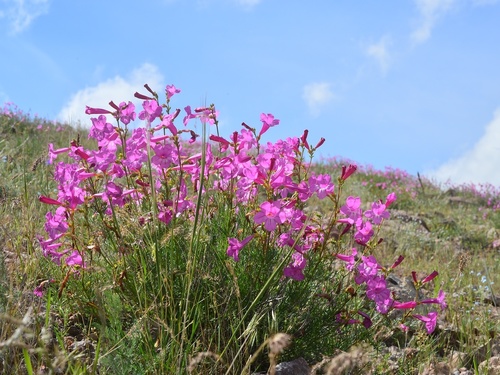 Kazakhstan’s wild landscapes harbor a remarkable variety of flora, estimated at roughly 6,000 vascular plant species. Of these, 451 are national endemics and 351 are sub-endemics, meaning that their core habitat lies within Kazakhstan’s borders. In total, that makes nearly 800 species that need careful study to understand species dynamics and assess threats.
Given the sheer numbers, it is alarming that many of these unique plants face serious threats to their survival. To halt the plants’ decline and safeguard their habitats, botanists in Kazakhstan are championing the establishment of Important Plant Areas (IPA). Experts state that creating these officially recognized conservation zones would help to protect not only isolated species, but also entire plant communities from extinction and habitat degradation.
As a start to this endeavor, these biologists recommend starting with the protection of the 400 plus national endemic plants. Presently, a particular case is being made for protecting the Incarvillea semiretschenskia—a rare flowering plant that for millions of years has grown exclusively in a small area in the Chu-Ili Mountains and nowhere else in the world. Recent investigations have revealed that Incarvillea’s numbers are dwindling and its limited habitats are threatened by overgrazing, limestone quarrying, and climate change.
In response, botanists recently launched the initiative “Protect the Key Botanical Areas of the Chu‑Ili Mountains: From Expert Assessment to Protection.” Led by the Open Laboratory of Nature Conservation Biology, and backed by the Institute of Botany and Phytointroduction, the Tanbaly Museum-Reserve, and the Global Greengrants Fund, the project aims to:
- Justify the protection of botanically significant natural territories in the Chu‑Ili Mountains
- Draft documents to include these territories in Kazakhstan's network of specially protected areas
- Rally public support for landscape and biodiversity conservation
- Promote the preservation of natural and cultural heritage sites.
By blending scientific research, legal frameworks, and public outreach, the push to establish IPAs represents a large-scale conservation effort. Successful implementation and outcomes realized by a network of formally recognized botanical havens will ensure that the unique plant biodiversity of Kazakhstan thrives for future generations.