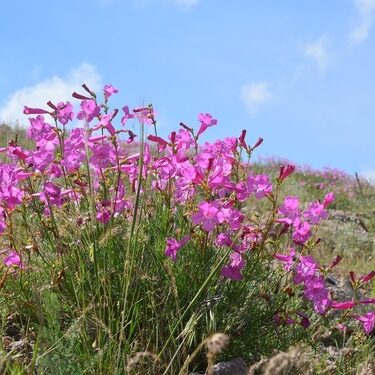
Beautiful and resilient Incarvillea flower
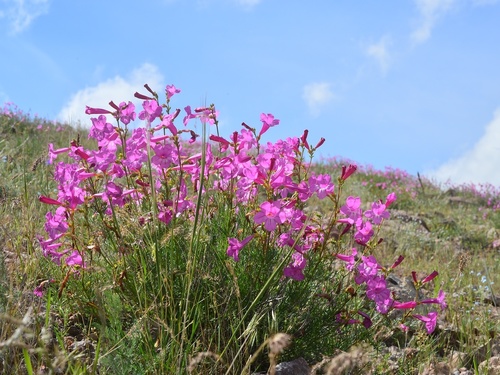
Kazakhstan’s rare Incarvillea semiretschenskia plant lays claim to a host of unique traits and peculiarities, so much so that botanists have dubbed it a “genuine desert miracle…of all Central Asia.” Tragically, despite surviving for 20 million years in harsh deserts, Incarvillea semiretschenskia now faces climate change and human habitat disruption that are pushing this species toward extinction.
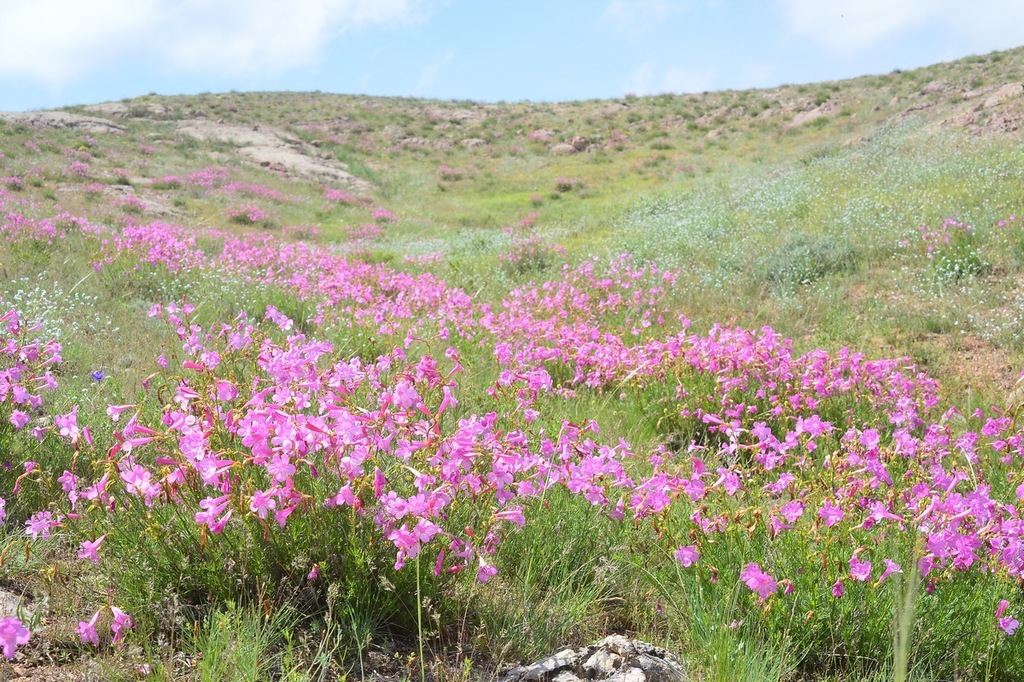
Incarvillea semiretschenskia has bright pink, trumpet-shaped flowers. The plant itself is a small perennial sub-shrub (about 30–50 cm tall) with deeply cut leaves and wiry stems.
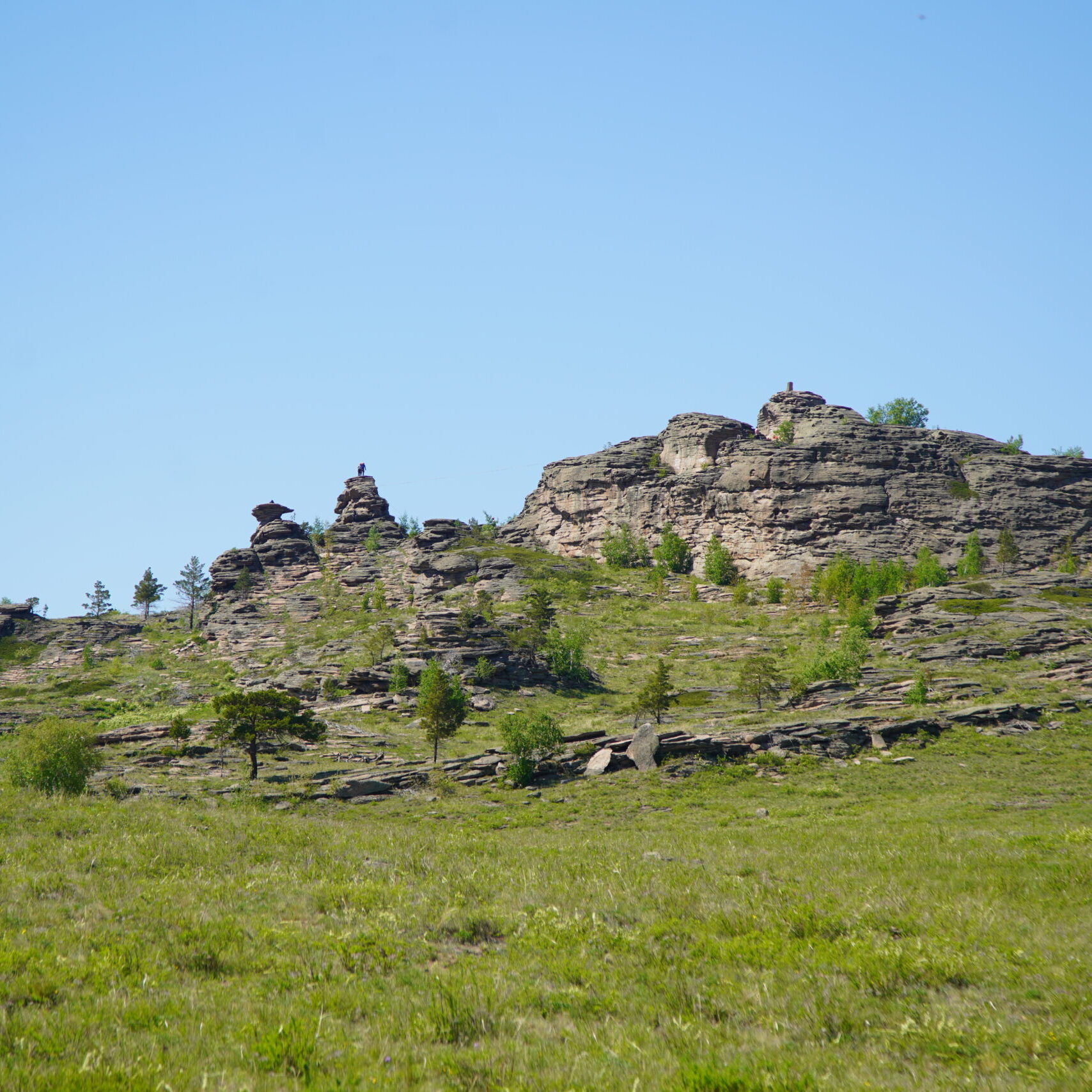
As remarkable as Incarvillea’s vibrant blossoms are, perhaps the plant's most extraordinary feature is its habitat. For millions of years this “desert miracle” has grown exclusively in a handful of scattered sites in the Chu-Ili Mountains—namely at the junction of the Almaty and Zhambyl regions—and nowhere else in the world.
Another reason that the plant is so extraordinary is its ancient lineage. Incarvillea semiretschenskia belongs to the Bignoniaceae (trumpet vine family), a plant family mainly found in the tropics (South America and Africa) in the form of trees and vines. Only a few species, in particular the genus Incarvillea, are represented in Central Asia. How this particular plant ended up in an arid, rocky mountain habitat of central Asia remains a mystery.
Adding to the flower’s peculiarities is that through the ages, Incarvillea remained hidden in plain sight, known only from a few isolated locations. Although the plant has been around for 20 million years, it was only discovered by science in the early 20th century. Credit for the discovery is given to local historian Vladislav Nedzvetsky, from whom the flower gets its Russian name (Nedzvetskia semirechenskaya). Subsequent populations were sporadically reported over the decades, but then seemed to vanish.
In recent years, the Institute of Botany and Phytointroduction has confirmed five populations of Incarvillea, a result of intensive research and analysis involving old botanical literature, maps, satellite imagery and field surveys. Unfortunately, the institute’s discoveries have not been a total success story, owing to the uncovering of current threats.
Threats
With Incarvillea found only in a handful of sites in the Chu-Ili Mountains, any disruption can be devastating. The plant’s dwindling numbers are driven by several human and environmental pressures—limestone quarrying, overgrazing, and impacts of climate change.
Limestone quarrying has emerged as the most acute threat. In summer 2023, a field expedition of botanists discovered an active limestone quarry within the Zhussandalinsky State Reserve Zone—a legally protected area. This quarry, in operation for approximately 10 years, had destroyed about 85–90 percent of one of Incarvillea’s known populations.
When scientists reported the quarry to government authorities, they received no response. Although mining eventually ceased—possibly due to public exposure or even because the quarry had been mined out—the site was abandoned without any ecological restoration work, despite legal requirements to do so.
Beyond decimating Incarvillea’s population, the very existence of the quarry raised concerns. No environmental assessment was conducted prior to constructing the quarry, nor were other requirements associated with a protected area taken into account when the site was allocated for development. The plant’s conservation status (“Decreasing species” in Kazakhstan’s Red Book) was also ignored.
Recent developments have offered reasons for optimism in the effort to safeguard Incarvillea. In May 2025, conservationists organized a press tour to draw attention to the quarry threats. As a result, about one dozen excellent articles and publications were published, highlighting how quarrying is destroying the species, attracting the attention of both the public and government authorities. Notably, the district division of the Ministry of Ecology and Natural Resources initiated a review of the reported destruction. While the outcome of that review is not yet known, it marks an important step in bringing official scrutiny to the problem. Meanwhile, lobbying and advocacy efforts to secure stronger protection for Incarvillea continue.
Apart from quarrying, other immediate pressures continue to endanger the plant’s survival. Biologists cite overgrazing as another danger to Incarvillea. Animals compact the thin, rocky soil on which the plant grows, making it unsuitable for regeneration, and even eat the plants down to stubbles. Conservationists advise regulating the number of animals grazing in the plant’s habitats, and not using the small areas inhabited by Incarvillea as pastures.
Climate change adds another layer of pressure. Recent years have brought unusually warm, early springs to the Chu‑Ili region, withering Incarvillea blossoms before they could set seed. Botanists warn that continued intense heat will threaten the species reproductive cycle.
Conservation Status
The Red Book of Kazakhstan has listed Incarvillea since 2006, classifying the plant as Category III, “Species with a “shrinking range.” It also appeared on the IUCN Red List of Threatened Species until 1997, but then the listing lapsed for decades. Thanks to the efforts of botanists in Kazakhstan, Incarvillea was restored to the IUCN Red List in November 2024 and classified as an endangered species.
Research and findings about the status of the Incarvillea have added momentum to adopt measures to increase its protection, as well as that of other rare flora. Kazakhstani botanists are championing the creation of Important Plant Areas to safeguard the plants and their fragile ecosystems.
Collaboration with Tamgaly
In the Almaty region, botanists are partnering with the Tamgaly state historical, cultural and natural reserve-museum, part of a UNESCO World Heritage Site, to raise the profile of the Incarvillea, while adding another layer of conservation for the plant, as well as other unique flora. The goal of this alliance is to expand the boundaries of the protected area, using Incarvillea as the starting point to do so. By linking conservation of the Incarvillea to existing cultural and natural heritage protections, experts hope to strengthen protections for Kazakhstan’s endemic plant life.
YES, I WANT TO HELP! Visit our donation page to donate by credit card or Paypal. Your support protects wildflowers and wildlife in Kazakhstan.