Fall 2025 migration update: young steppe eagles take flight
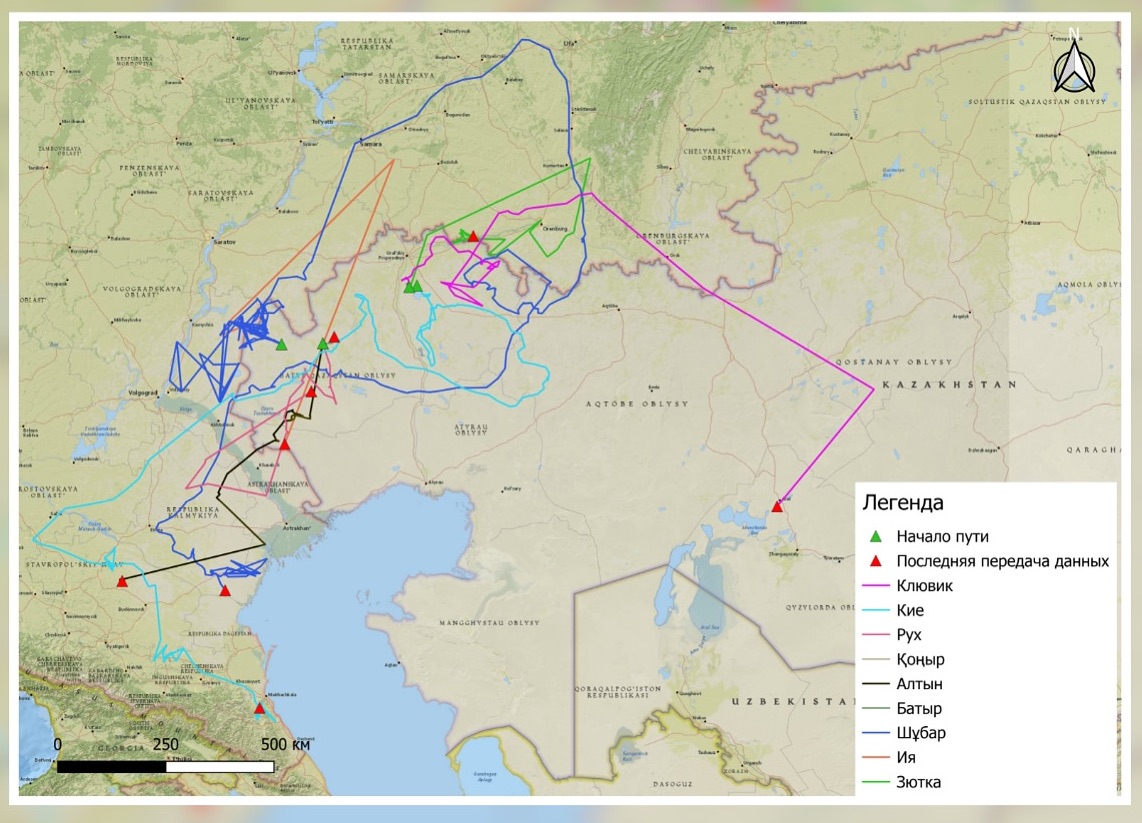
 As part of Kazakhstan’s fall 2025 migration season, nine juvenile steppe eagles began their journeys to wintering grounds in western Kazakhstan in September, marking the young birds’ first migrations. Eight eagles moved westward toward the Caucasus along the Afro-Eurasian Flyway, while one individual, named Klyuvik, headed south across the border into Uzbekistan.
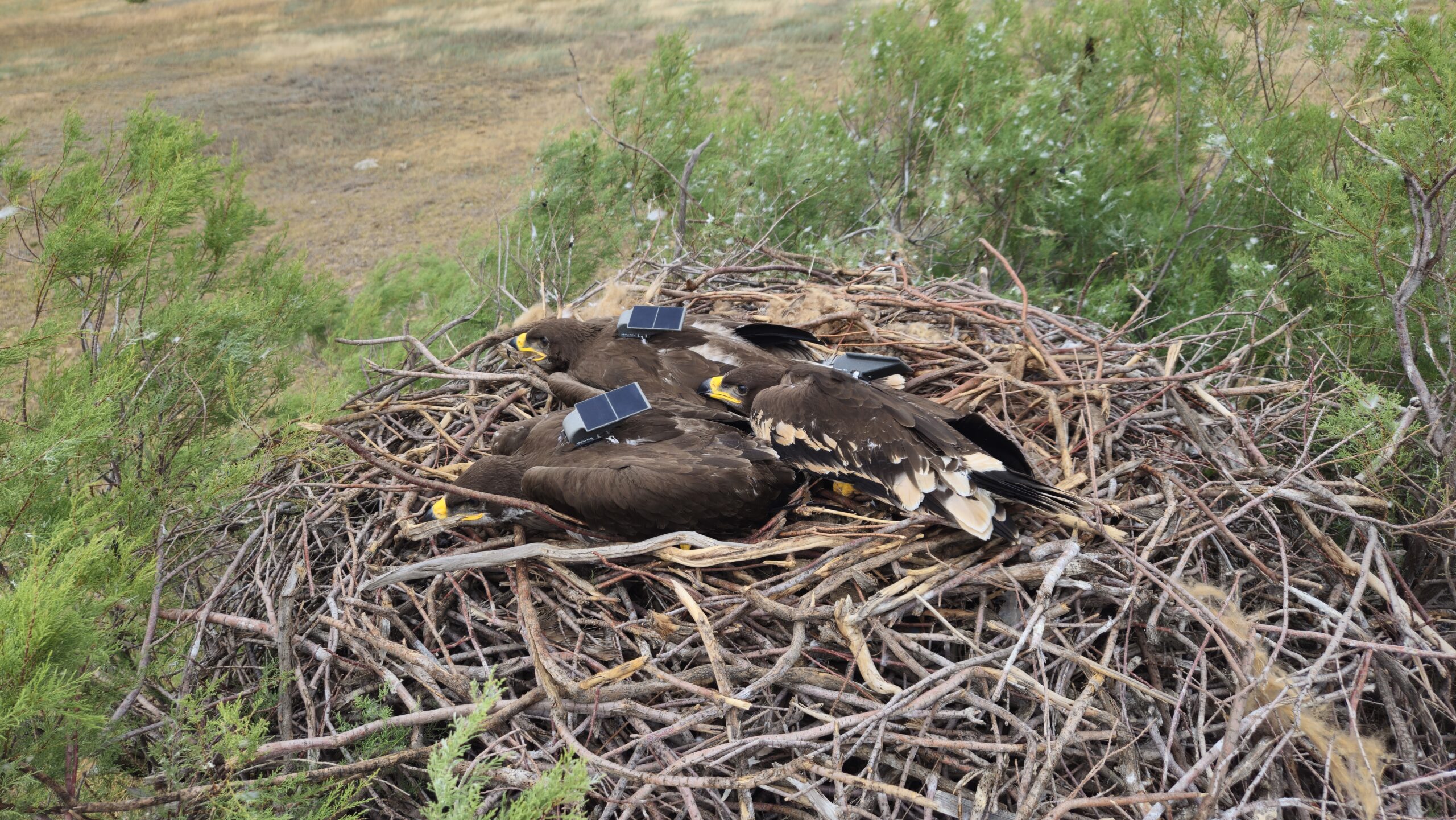
Scientists from the Association for the Conservation of Biodiversity in Kazakhstan (ACBK) outfitted the birds with GPS trackers—tiny backpacks strapped between their wings on the birds' backs—this summer in western Kazakhstan. These miniature devices allow scientists to monitor the eagles’ movements, identify threats, and detect causes of mortality during migration. A loss of signal often indicates that a bird has been poached or killed on power lines, most commonly by electrocution, though collisions also occur. In other cases, the bird may be “off-grid” and transmits its data later when it re-enters a coverage area.
Data collected from the trackers helps to determine the routes, conditions and concentrations of birds during migration. Hopefully, the data is also used to inform planning of infrastructure projects, such as wind-energy development, to mitigate damage.
On the journey to their wintering grounds, steppe eagles traverse up to 30 countries, covering vast areas of Eurasia and Africa. Key countries along their migratory route include Azerbaijan, Armenia, Iran, Afghanistan, Pakistan, India, and Nepal. The eagles’ wintering destinations span the Middle East and East Africa (Saudi Arabia, Oman, Yemen, Sudan, Ethiopia, and Kenya) as well as countries of South Asia (India, Iran, Pakistan).
Kazakhstan remains central to the species’ survival: up to 85 percent of the global steppe eagle population nests within the country’s borders, underscoring its critical role in conserving this magnificent raptor.
Note: As part of the steppe eagle efforts, ACBK members voted to choose the names of the nine juveniles: Shubar, Batyr, Klyuvik, Altyn, Konyr, Ruh, Zyutka, Kie, and Iya. On the map below you can see their starting point (green) and their most recent transmission location (red).