
Kulans at Altyn Dala released into the wild
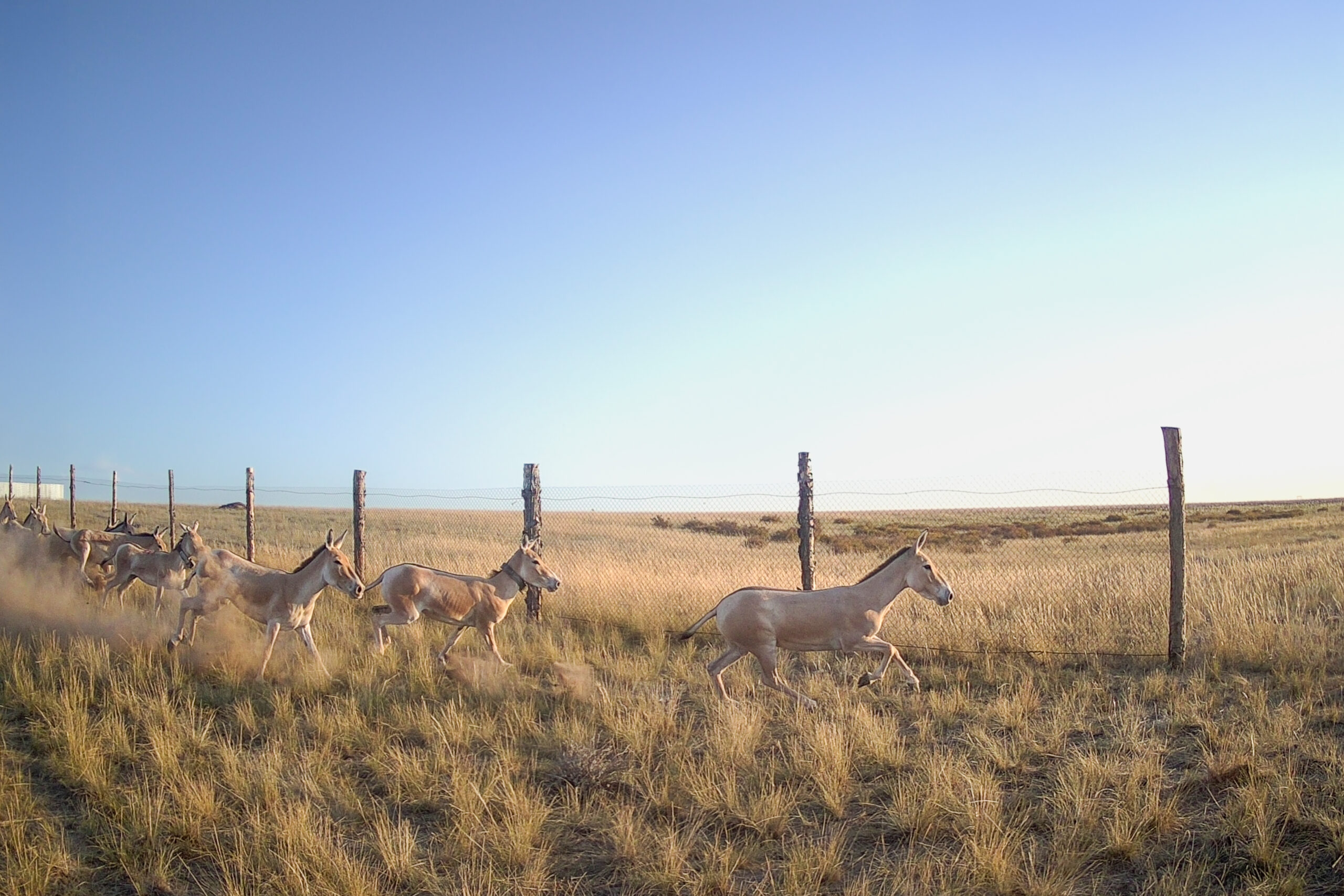
Kazakhstan’s Asiatic wild ass (kulan) reintroduction program has reached another milestone with the late summer release of animals from the Altyn Dala acclimatization enclosure into the wild. After nearly a century of absence in this region, the kulans are once again roaming free across the Torgai steppe of central Kazakhstan.
For the past year, the 24 kulans transported to Altyn Dala Nature Reserve’s Wild Ungulate Reintroduction Centre in October 2024 lived in a 56-hectare enclosure to acclimatize to local conditions before their release. Over several days in late August 2025, Altyn Dala rangers conducted a “soft release” to move the kulans into the wild, allowing small groups of kulans to leave gradually.
To support long-term monitoring, several kulans were fitted with GPS collars and solar-powered ear tags, the first time this technology has been used on the ungulates. Early tracking data revealed valuable insights into their feeding patterns and movements:
- Winter foraging: The kulans preferred to feed naturally, digging through snow with their hooves and using tebenyovka (snow traps) to reach vegetation. Supplemental feeding was provided only during extended snow cover.
- Movement patterns: On average, the kulans traveled about 26 km per day. Some moved northwest within the reserve before retracing their routes south, while others gradually dispersed southeast. There were even signs of overlapping paths, suggesting that separate bands may eventually meet and merge into larger herds.
Lessons from a harsh winter
The one-year acclimatization period was designed to help the kulans adjust to the region’s extreme climate—and the exceptionally severe winter of 2024–25 put that adaptation to the test. Tragically, nine of the 24 animals did not survive the winter in the enclosure, reducing the number to 15 by February 2025. Five deaths were attributed to a combination of extreme cold, deep snow, and nutritional stress, while the remaining four resulted from other factors.
Though these losses represented a setback, specialists quickly revised management strategies to reduce future risk. Key improvements included: (1) enhanced feeding with high-protein supplements during winter, (2) increased veterinary monitoring and preventive care, and (3) refined enclosure management to better monitor and support the herd.
Building toward a sustainable population
As of late 2025, the kulan reintroduction in Altyn Dala is on track with the population continuing to grow—three births in the wild have been documented since 2024. The long-term goal remains to introduce around 100 kulans in total to Altyn Dala to create a sustainable and thriving future population.