
Kazakhstan welcomes a new generation of Przewalski’s horses
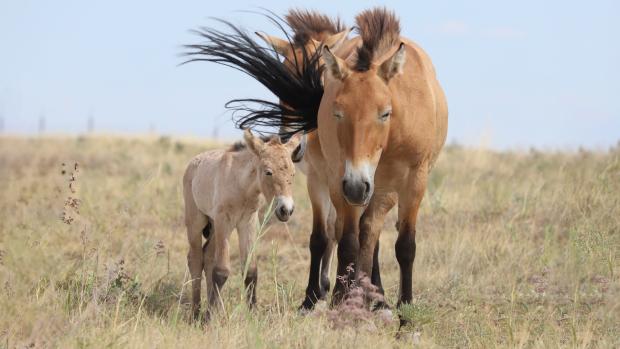
Two Przewalski’s horse foals have been born on Kazakhstan’s steppe, marking a major milestone in the country’s effort to restore the world’s last surviving wild horse to part of its historic range.The births took place at the Alibi Reintroduction Center in Altyn Dala State Nature Reserve, where reintroduced horses are being acclimated before release into the wild. The first foal, born on August 22, marked the first Przewalski’s horse born on the Central Asian steppe in 200 years. On August 31, a second foal was born.Their arrival is being celebrated as an early sign that the reintroduced horses are settling into Kazakhstan’s grasslands.
Just as important, the foals show that the herd is beginning to reproduce naturally and exhibit behaviors needed for a wild population to grow. Ultimately, the goal is to establish a genetically diverse, self-sustaining population capable of surviving and reproducing in Kazakhstan’s grasslands.
Researchers will now be able to follow the first Przewalski’s horses born in Kazakhstan under the program and learn how they develop, behave, and move through the reserve as they mature.
A busy year for Kazakhstan’s returning horses
The births follow a series of developments for the reintroduction effort this year.
In late May, five Przewalski’s horses were released at Altyn Dala after spending nearly a year in large acclimatization enclosures. The group—one stallion and four mares—had arrived in Kazakhstan in June 2025, adapted to the local climate, and survived its first steppe winter. Before release, the stallion was fitted with a GPS collar so specialists could monitor the group’s movements and better understand how the horses use their new habitat.
The program continued to grow in June, when four stallions from Prague Zoo and four mares from Tierpark Berlin arrived to strengthen the emerging population. Like earlier arrivals, the newcomers will spend about a year at the Alibi Reintroduction Center, gradually adjusting to the steppe’s harsh seasonal conditions before they are considered for release.
Returning the world’s last wild horse
Kazakhstan joined the international reintroduction effort in 2024, when the first seven Przewalski’s horses were transported from European conservation centers to Altyn Dala. Additional groups arrived in 2025 and 2026, and the program is expected to continue through at least 2029, with a target of roughly 40 to 45 horses in Central Kazakhstan. The work brings together Kazakhstan’s forestry and wildlife authorities, the Association for the Conservation of Biodiversity of Kazakhstan, Prague Zoo, Tierpark Berlin, Hortobágy National Park, the Frankfurt Zoological Society, and other partners.
Przewalski’s horse, often described as the world’s last truly wild horse, disappeared from the wild globally by the late 1960s. Its survival depended on captive breeding programs, which later made reintroductions possible in parts of Central Asia. Conservationists see its return to Kazakhstan not only as the recovery of a rare species, but also as part of a broader effort to restore steppe ecosystems, where large grazers play an important ecological role.