Tigers come roaring back to Kazakhstan
In September 2024, two adult Amur tigers—12-year-old female Bodhana and nine-year-old male Kuma—were translocated from a sanctuary in the Netherlands to Kazakhstan’s Ili-Balkhash Nature Reserve, marking the end of almost 70 years without tigers in the region. The homecoming is one stage of a long-term program to revive Kazakhstan’s lost tiger population and restore the Ili-Balkhash delta ecosystem.
Today the pair is thriving in their new home. Read on to learn how the Bodhana and Kuma are settling in, measures underway to ensure peaceful human/tiger coexistence, and why this program holds both ecological and cultural importance.
Adapting to a new home
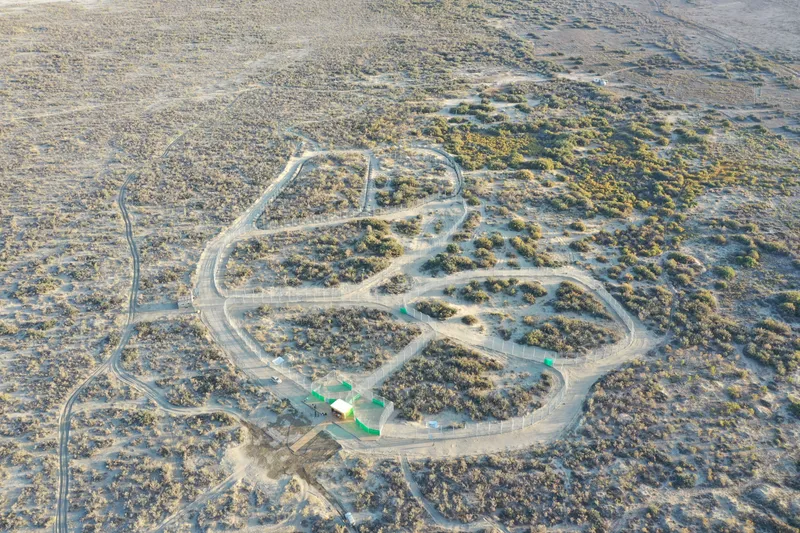
Nearly a year into their acclimatization, Bodhana and Kuma have adapted well to life in the Ili-Balkhash Reserve’s specially built 3-hectare (about 7 ½ acres) enclosure. According to WWF Central Asia, both tigers eat normally, rest often, and exhibit calm behavior.
Only a small number of employees are allowed into the enclosure for feeding and other essential care tasks. This limited contact is crucial for developing wild behaviors and fostering the tigers’ natural avoidance of people, a key factor for their offspring’s successful reintroduction into the wild.
For these reasons, monitoring of the tigers is mostly done remotely, using a video surveillance system. Cameras installed in the enclosures feed live video to the Observation Center, located about a kilometer from the complex. Staff members spend most of their time in front of monitors, tracking the tigers’ activities, recording important behavioral changes, and transmitting data for subsequent analysis.
Especially on hot days, the tigers enjoy cooling off in a freshwater pool constructed and specially outfitted for them inside the enclosure. Relaxing in the pool not only helps the pair cope with the summer heat, but also encourages physical activity, improving their overall condition during the acclimatization period.
Breeding prospects
A major goal of Kazakhstan’s tiger reintroduction program is for Bodhana and Kuma to breed, producing healthy offspring that can eventually be released into the wild. (Bodhana and Kuma themselves will not be released and will remain in the Ili-Balkash enclosure). This strategy—using a founder breeding pair to populate the wild—is critical to the program’s success.
This past winter, staff at the nature reserve recorded the first interaction between the tigers. Experts caution, however, that one, or even several, encounters do not guarantee successful breeding.
Preventing conflicts between tigers and humans
An essential component of the tiger introduction program is to ensure peaceful coexistence between the big cats and humans. Towards this end, measures are underway involving activities of an anti-conflict team, outreach to local communities, and sustainable development of rural areas.
Like other tiger range countries, Kazakhstan has established a specialized anti-conflict group trained to respond to any potential encounters between tigers and humans or livestock. Group members conduct regular patrols of the surrounding area and use satellite collars to monitor tiger movements, allowing early detection if a tiger approaches a village. Should an incident arrive, it will be handled using pre-approved protocols and methods.
Community outreach is another important area of work. A combination of meetings and printed educational materials advise residents how to behave in the event of encountering a tiger, who to contact, and what steps to take.
In addition, attention is paid to the sustainable development of adjacent rural areas. The tiger reintroduction program provides support for alternative sources of income that do not harm the environment, including awarding grants to develop agriculture and ecotourism. Together, these efforts form part of a long-term strategy for the cohabitation of humans and tigers in the region.
Why it matters
The arrival of Bodhana and Kuma, alongside the pair’s successful acclimatization in Ili-Balkhash thus far, are incremental successes in Kazakhstan’s hopes to host wild tigers. With luck, the two will produce cubs and those offspring can begin the process of being released and establishing a self-sustaining wild population. Conservationists have set a target of 50 wild tigers in Kazakhstan by 2035, and cubs born in the country would represent a key milestone in achieving that goal.
Kazakhstan hopes to become only the 14th country where tigers live in the wild. If the program is successful, it will be the first time a tiger population has been re-established in a region where the species was completely extinct.
Apart from the program’s ecological benefits, the tiger’s return to Kazakhstan also reconnects the country to its historical and cultural roots. Tiger imagery is found in archaeological artifacts from the ancient Saka era, adorning clothing and jewelry. Tigers also appeared in the Kazakh epic tradition.
Fun Fact: Wild Amur tigers typically hunt large prey (such as wild boar or deer) about once every 7–10 days, consuming roughly 6–8 kg of meat per day on average. In the enclosure, Bodhana and Kuma are fed five to six kg of beef per day. One day a week—in this case, Saturday—is a day of fasting, when the tigers drink only water and receive no food. This practice mirrors feeding patterns in the wild, where breaks between kills and meals are a normal part of tiger physiology.