
Steppe eagle global action plan approved at UN meeting on migratory species
Things are looking up for migratory species, the result of recently concluded UN meetings in Brazil. At the 15th Meeting of the Conference of the Parties (COP15) to the Convention on Migratory Species (CMS), held from 23–29 March 2026, governments approved or upgraded action plans and expanded protection for dozens of migratory species worldwide. Among the outcomes was the formal approval of the Steppe Eagle Global Action Plan, strengthening international efforts to secure the future of this iconic migratory raptor.
Populations of the steppe eagle (Aquila nipalensis) have declined sharply over recent decades, driven by a combination of human-related threats. As a result, the steppe eagle is now classified as Endangered on the IUCN Red List, highlighting the need for urgent, coordinated, and effective international action.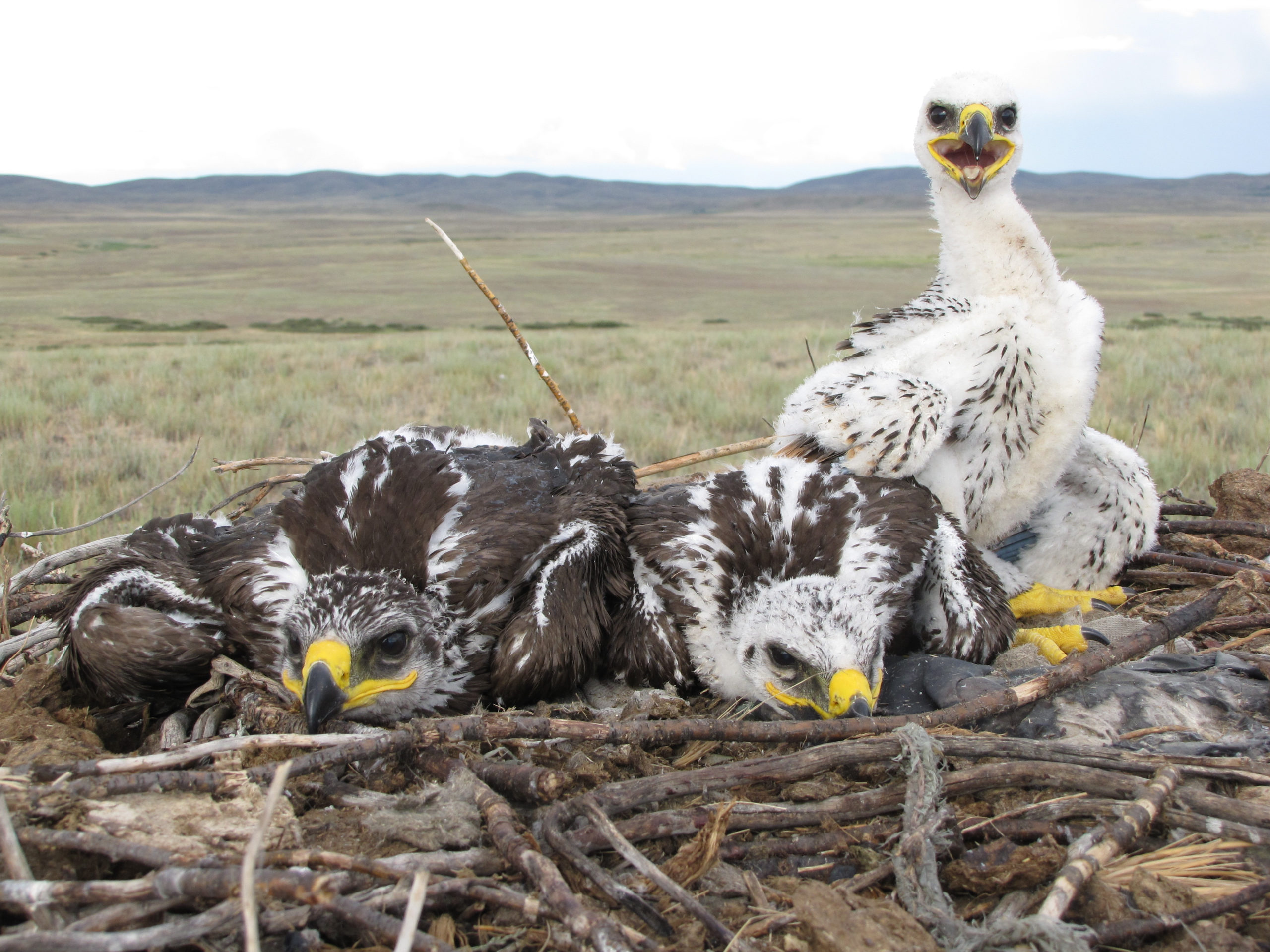
The newly approved Global Action Plan, developed through collaboration among governments, conservation organizations, and experts, provides a framework to stabilize and recover populations across the species’ vast migratory range, including key habitats in Kazakhstan and along the Central Asian Flyway.
At the heart of the plan are six strategic goals—backed by 49 concrete actions—designed to address the principal threats facing the species. These goals aim not only to reduce immediate pressures, but also to address critical knowledge gaps, guide conservation action across the steppe eagle’s global range, and ensure support for the plan’s effective implementation:
- Reduce the impact of energy infrastructure on steppe eagles along the Central Asian Flyway
- Significantly reduce mortality resulting from legal and illegal take and trade
- Understand and reduce the impact of unintentional poisoning on steppe eagle populations
- Attain good quality habitats that support steppe eagle populations across the species’ range
- Address key knowledge gaps on steppe eagle distribution, movement, and threats through increased collaboration and coordinated research, to inform conservation action across their global range
- Ensure endorsement and effective implementation of the steppe eagle Global Action Plan across all range states through outreach with key communities and all major stakeholders
The steppe eagle’s decline mirrors wider patterns observed among many migratory birds of prey around the world. More than half (53%) of the 93 raptor species listed under the Raptors MOU Annex 1 are experiencing global population declines, with vultures and eagles exhibiting particularly severe rates of decrease. Against this backdrop, the approval of the steppe eagle Global Action Plan marks an important step toward the coordinated international action needed to protect other vulnerable migratory raptors across their flyways.
Learn more about steppe eagles and threats from overhead power lines and wind power turbines.